
Know what goes in.
Review your inputs and adjust the assumptions that matter to the calculation.
THE ENGINEERING WORKBENCH
Practical tools for mechanical and industrial work.
Understand the inputs. Follow the method. Make an informed decision.
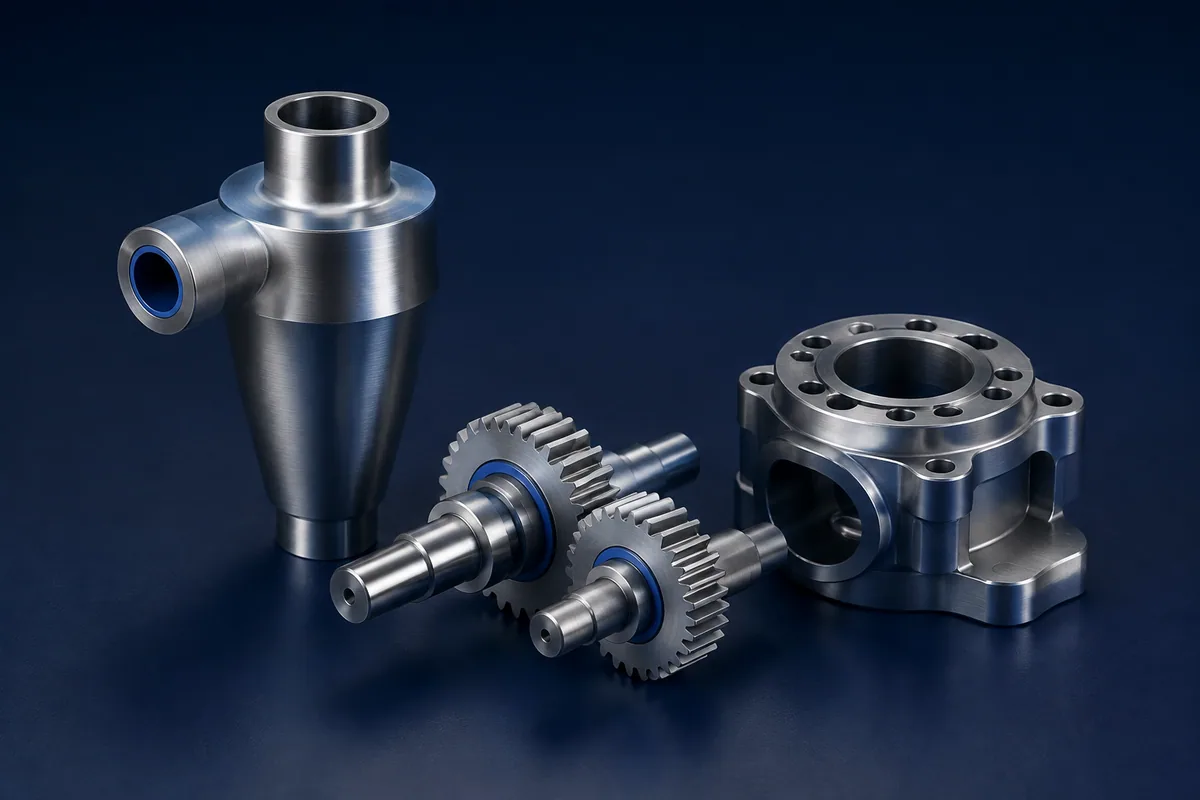
From process requirements to concepts, layouts and documented calculations. Discuss the work you need and agree the scope before the project begins.
Cyclone sizing, airflow, pressure drop and fan-duty calculations.
2 workspacesAir slides, silo flow screening and conveyor pulley-shaft checks.
3 workspacesGears, bearings, shafts, hubs and keyed connections.
3 workspacesMachining parameters, CNC cycles, fits and inspection planning.
3 workspacesREADY WHEN YOU ARE
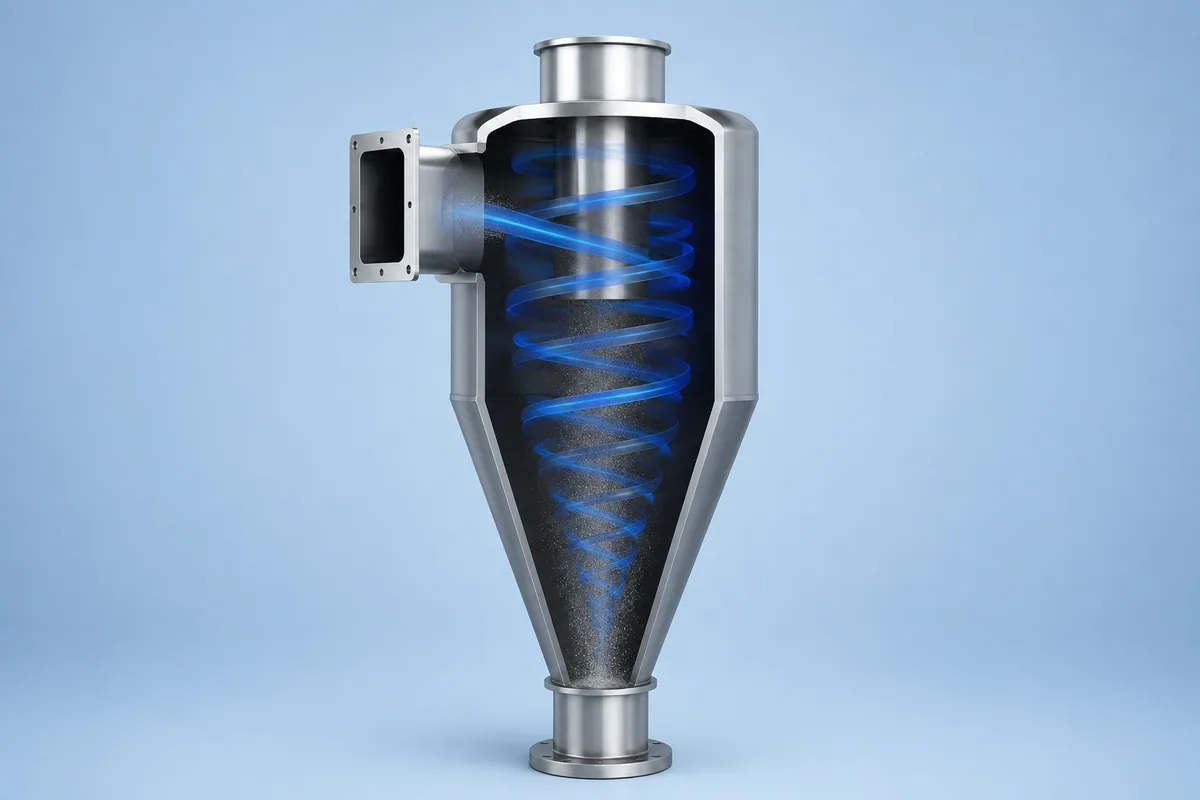
DEDUSTING & AIR
Compare nine geometries, grade efficiency, three pressure-drop methods, duct losses and fan power.
BULK MATERIALS
Check conveying capacity, aeration demand, pressure allowance, blower duty and motor rating.
MACHINE DESIGN
Explore spur-gear geometry, gearbox ratios and idealized shaft stress, deflection and speed.

CNC & MANUFACTURING
Plan thread lead, tapping feed, drilling parameters, peck motion and idealized cycle time.
Preliminary tools support engineering judgement. Review the assumptions and limitations before using any result.
Concept imagery generated for Indunect.
SEE THE RELATIONSHIP
Two examples of the relationships behind the tools.
DEDUSTING & AIR
Pressure loss (% of baseline)
Airflow (% of baseline)
Relative pressure loss = relative airflow²
Cyclone example: fixed geometry, air density and pressure coefficient.
| Airflow (% of baseline) | Pressure loss (% of baseline) |
|---|---|
| 50% | 25% |
| 75% | 56% |
| 100% | 100% |
| 125% | 156% |
| 150% | 225% |
MACHINE DESIGN
Basic rating life (% of baseline)
Equivalent bearing load (% of baseline)
Relative basic life = relative load⁻³
Ball bearing example: fixed dynamic load rating and speed; basic L₁₀ life.
| Equivalent bearing load (% of baseline) | Basic rating life (% of baseline) |
|---|---|
| 75% | 237% |
| 100% | 100% |
| 125% | 51% |
| 150% | 30% |
Normalized illustrations, not project results. Use the workspaces to check your own inputs and assumptions.
KNOWLEDGE, WITH CONTEXT
Keep formulas, units and assumptions close at hand. Explore practical references with clearly stated boundaries.
Browse the knowledge hubReview your inputs and adjust the assumptions that matter to the calculation.
See the equations, units and engineering path behind each result.
Know where preliminary results end and project-specific verification begins.
INDUSTRIAL COOPERATION
A growing bridge between engineers who specify work and manufacturers who can deliver it.